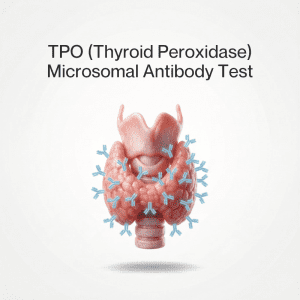
 In today’s fast-paced lifestyle, thyroid disorders are increasingly common. One of the most important diagnostic tests for autoimmune thyroid conditions is the TPO (Thyroid Peroxidase) Microsomal Antibody test. If you’re living in or near Mulund, Mumbai and seeking accurate testing, this comprehensive guide will help you understand everything about the TPO test, why it’s done, how it works, what the results mean, and where you can get it done locally.
What Is the TPO (Thyroid Peroxidase) Microsomal Antibody Test?
The TPO (Thyroid Peroxidase) Microsomal Antibody test measures the amount of antibodies against the thyroid peroxidase (TPO) enzyme in your blood. TPO is essential for the production of thyroid hormones like T3 (Triiodothyronine) and T4 (Thyroxine).
When the immune system mistakenly attacks thyroid tissue, it produces TPO antibodies — a hallmark of autoimmune thyroid diseases such as:
- Hashimoto’s Thyroiditis
- Graves’ Disease
- Other autoimmune thyroid conditions
This test is valuable not only for diagnosis but also for monitoring treatment response and predicting long-term outcomes.
Why Is the TPO Test Important?
Many people with thyroid dysfunction have normal levels of T3 and T4 but still experience symptoms due to autoimmune involvement. The TPO test helps:
- Detect early autoimmune thyroid damage
- Distinguish types of thyroid disease
- Determine the cause of symptoms like fatigue, weight gain, hair loss
- Monitor treatment effectiveness
- Predict risk of future thyroid dysfunction
Symptoms That May Indicate Need for a TPO Test
You may be advised to take this test if you experience:
- Unexplained fatigue
- Unusual weight changes
- Persistent hair loss
- Mood swings or depression
- Cold or heat intolerance
- Goiter (enlarged thyroid)
- Irregular menstrual cycles
- Difficulty conceiving
Who Should Get a TPO (Thyroid Peroxidase) Microsomal Antibody Test?
This test is particularly recommended for:
- Individuals with suspected autoimmune thyroid disease
- Patients with abnormal TSH, T3, or T4 levels
- Women planning pregnancy or experiencing fertility issues
- Persons with family history of thyroid disorders
- Individuals with other autoimmune illnesses
TPO (Thyroid Peroxidase) Microsomal Antibody Test Procedure
Here’s what you can expect:
1. Appointment & Preparation
- Book online or call the lab ahead
- Fasting is usually not required for a TPO test
- Wear comfortable clothing
2. Sample Collection
- Performed by a trained phlebotomist
- A small blood sample is drawn, usually from the arm
- The process takes only a few minutes
3. Lab Analysis
- The sample is analyzed using advanced immunoassay machines
- Technicians measure the level of TPO antibodies per mL of blood
4. Report & Interpretation
- Reports are generally ready within 24–48 hours
- You’ll receive reference ranges and doctor’s interpretation
Understanding Your TPO Test Results
TPO antibody levels are expressed in IU/mL. While ranges may vary slightly by lab, typical results are interpreted as:
- Normal / Negative: Low risk of autoimmune thyroid disease
- Elevated / Positive: Suggests autoimmune involvement
- Highly Elevated: Strong indication of Hashimoto’s or Graves’ disease
Important: Results should always be discussed with your physician in conjunction with TSH, T3, and T4 tests.
Benefits of Getting a TPO Test
1. Early Detection
Autoimmune thyroid conditions can be silent for years. This test helps catch them early.
2. Better Treatment Decisions
Doctors can tailor thyroid hormone therapy more precisely.
3. Monitors Disease Progression
Your autoimmune activity can be tracked over time.
4. Helpful in Pregnancy
High TPO antibodies can affect pregnancy; early detection is crucial.
Tips Before Taking the Test
✔ Inform the lab if you are on thyroid medications
✔ Share your medical history
✔ Ask about prep instructions if you’re combining tests
✔ Keep previous thyroid test reports handy
TPO Test vs Other Thyroid Tests
Test | What It Measures | Why It’s Done |
TSH | Thyroid-stimulating hormone | Primary screening for thyroid function |
T3 & T4 | Thyroid hormones | Measures hormone levels |
TPO | Autoantibodies | Detects autoimmune thyroid condition |
TRAb | Thyroid receptor antibodies | Used in Graves’ disease |
The TPO antibody test complements hormone testing to provide a complete picture.
Common Myths About Thyroid Antibody Testing
Only women get thyroid problems. – False. Both men and women can have autoimmune thyroid disorders.
Normal TSH means thyroid is healthy. – Not always. TPO antibodies can be positive even with normal hormone levels.
Once antibodies are high, nothing can be done. – Many patients respond well to treatment and monitoring.